Inside FBS Football: A 4-Round 2026 Breakdown
College football is not simply a smaller version of the NFL; it is a 2026 competition built around conferences, campus identity, uneven schedules, and the College Football Playoff. The Football Bowl S...
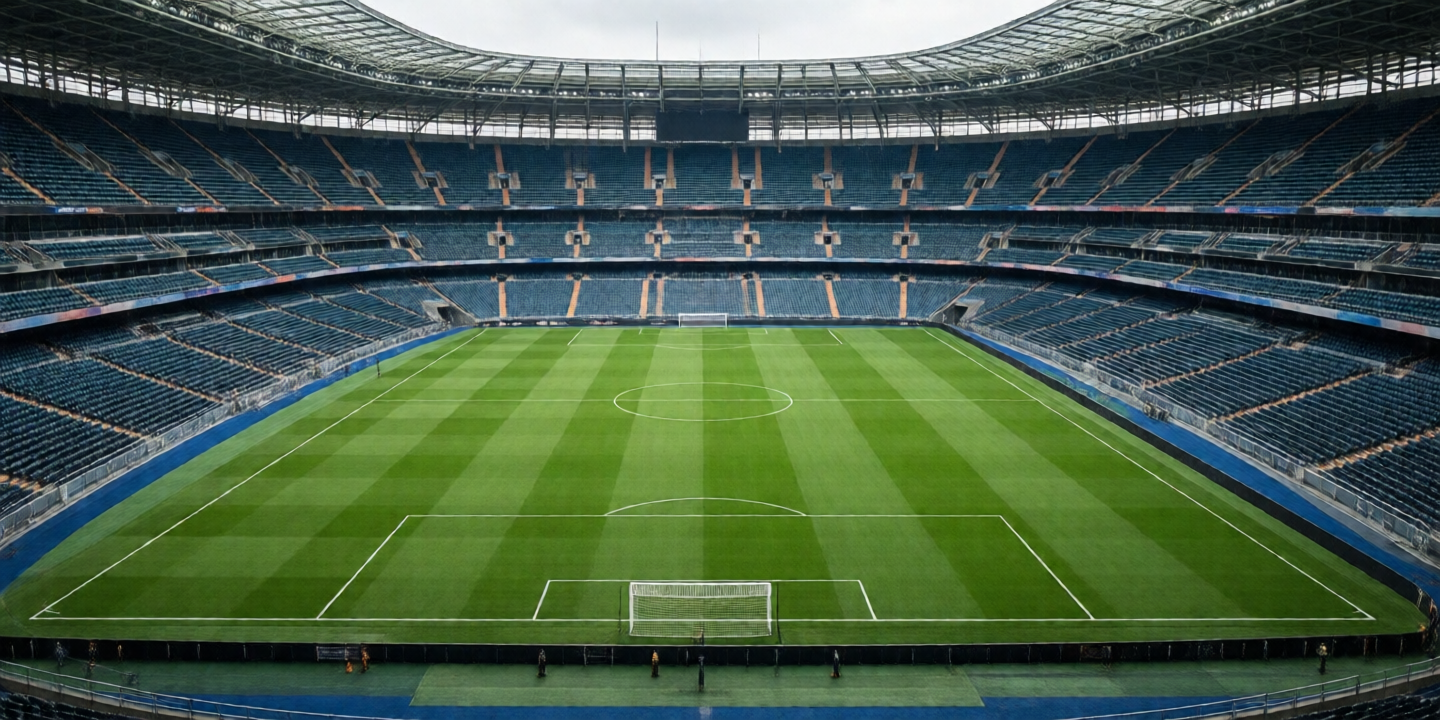
Inside FBS Football: A 4-Round 2026 Breakdown
College football is not simply a smaller version of the NFL; it is a 2026 competition built around conferences, campus identity, uneven schedules, and the College Football Playoff. The Football Bowl Subdivision, led by programs such as Indiana, Oregon, Notre Dame, Ohio State, and Alabama, drives the national conversation across the United States. The 2026 regular season runs from late August through early December, followed by bowl games and the CFP, with the national championship scheduled for January 25, 2027, at Allegiant Stadium in Las Vegas. ESPN’s schedule structure separates FBS conferences, FCS leagues, weekly matchups, bowl games, and CFP fixtures, while the NCAA supplies official scores, rankings, statistics, and championship information. The most important lesson is simple: evaluate conference strength, opponent quality, quarterback stability, and travel before trusting rankings or betting lines.

Photo by Allen Boguslavsky on Pexels
College football punishes lazy analysis. I learned that after years of backing supposedly “safe” favorites that collapsed against better defensive fronts, hostile crowds, or a schedule nobody had properly examined. A team’s record can look impressive while hiding weak opposition, close escapes, or a brutal November stretch still waiting around the corner. That is why Match Daily approaches college football as a data problem first and an emotional spectacle second, even though the emotion is exactly why we keep coming back.
Want a sharper way to study the season?
The Quick Comparison
| Area | What it measures | Why it matters in 2026 | Best source |
|---|---|---|---|
| FBS schedule | Weekly opponents, kickoff times, venues, and broadcasts | Reveals travel, rest, and conference difficulty | ESPN College Football Schedule |
| Conference race | ACC, Big 12, Big Ten, SEC, and other league contests | Determines quality wins and championship access | NCAA and conference offices |
| FCS crossover | Games against teams outside the top subdivision | Can create misleading records and upset risk | NCAA statistics |
| CFP pathway | Regular-season performance, conference results, and postseason games | Decides who reaches the national title race | NCAA FBS Football |
| Betting evaluation | Spread, total, injuries, pace, and matchup data | Separates public hype from measurable value | Licensed odds providers and official team reports |
The schedule is the backbone of every serious college football forecast. ESPN’s 2026 listing divides the regular season into Weeks 1 through 15, with the opening window beginning August 22 and the final regular-season window ending December 12. Bowl games and CFP fixtures occupy a separate postseason section running into January 2027, so readers should never treat an ordinary weekly schedule page as the complete championship calendar.
Round 1: How Does the 2026 Schedule Shape College Football?
The 2026 college football schedule shapes rankings by combining conference games, nonconference tests, travel demands, rest periods, and late-season pressure. Week 1 spans August 22 through September 7, while later windows generally cover one week at a time; the decisive information is not only who plays, but where and when the game occurs. A noon kickoff in Charlottesville, Virginia, creates a different environment from a night game at the Los Angeles Memorial Coliseum.
That distinction matters because college football teams are not interchangeable machines. A roster built for fast tempo may struggle after cross-country travel, while a young quarterback can look brilliant at home and ordinary when forced to communicate inside a hostile stadium. The 2026 schedule data highlights this range: North Carolina is listed against TCU at Aviva Stadium in Dublin, Ireland, while San José State visits USC in Los Angeles and NC State travels to Virginia. Those locations are not decorative details; they influence preparation, fatigue, crowd control, and market expectations.
My first operational rule is to divide every schedule into three categories:
- Proven opponents: ranked teams, strong conference rivals, and recent postseason contenders.
- Unstable opponents: programs with new coaches, transfer-heavy depth charts, or uncertain quarterback situations.
- Record-padding opponents: games where talent differences are so large that the final score tells you very little.
The third category is where casual predictions go wrong. A 10–2 record built on weak nonconference opponents does not automatically outrank an 8–4 record produced against the SEC, Big Ten, or a demanding Big 12 slate. According to the NCAA football rules and competition framework, college football is structured around distinct divisions and governance systems, so comparing records without context is analytically careless.
2026 college football schedule guide
The travel edge is another underused angle. A team traveling from the Eastern Time Zone to Ireland or the Pacific Time Zone may have more preparation resources than it did decades ago, but body-clock disruption remains a real variable. Track kickoff time in the visiting team’s biological clock, not just the local television listing. That small adjustment has saved me from more bad selections than any preseason top-25 list ever did.
Round 2: Which Conferences and Teams Deserve the Most Attention?
The most important 2026 college football conferences are the ACC, Big 12, Big Ten, SEC, American Athletic Conference, Conference USA, Mid-American Conference, Mountain West, Sun Belt, and FBS independents, with the FCS operating as a separate competitive level. The Big Ten and SEC attract enormous attention because their schedules frequently contain multiple nationally relevant programs, while the ACC and Big 12 can produce volatile races where quarterback play and defensive efficiency change the entire table.
The NCAA’s FBS coverage identifies national championship results, rankings, headlines, and statistical developments, but preseason reputation still distorts public judgment. Indiana’s reported 27–21 victory over Miami for the national championship is a useful reminder that historical assumptions eventually get broken. Indiana’s first title was not merely a feel-good result; it demonstrated how quickly a program can move from outsider status to the center of the national conversation when roster development, coaching, and postseason execution align.
Oregon also deserves close monitoring in 2026 because quarterback Dante Moore is identified among the leading returning players, while Notre Dame enters the season with defensive talent such as Leonard Moore receiving major attention. Ohio State remains a recurring reference point in national rankings, and Alabama continues to command market respect even when its roster changes. Those names matter, but names alone do not establish value.
Here is the conference checklist I use before trusting a ranking:
- Compare returning production on offense and defense.
- Check whether the starting quarterback changed.
- Measure transfer additions against outgoing starters.
- Identify the toughest four-game stretch.
- Separate home performance from road performance.
- Review red-zone efficiency and turnover margin.
- Check whether defensive depth survives injuries.
Research and data consistently point toward efficiency rather than raw win totals as the better predictive foundation. For a practical starting point, the NCAA FBS statistics and rankings hub provides the official competitive context, while ESPN supplies the weekly schedule details. “The object of the game is to score more points than your opponent,” the NCAA rulebook states in substance, but the path to those points is where every serious matchup is decided.
Get the broader team and tournament context before making a prediction.

Photo by David Morris on Pexels
A contrarian point deserves emphasis: conference branding can become a handicap. When the public assumes that every SEC or Big Ten favorite is automatically stronger, spreads may inflate beyond the actual matchup. A mid-tier opponent with an experienced offensive line can stay inside a large number, especially if the favorite is looking ahead to a rivalry game. Conversely, a famous underdog can be overpriced because bettors confuse popularity with probability. The data does not care which helmet sells more merchandise.
Round 3: How Should You Read Scores, Rankings, and Betting Lines?
You should read college football scores through efficiency, opponent quality, game state, and market movement rather than the final margin alone. A 35–10 victory may reflect dominant execution, but it may also include short fields from turnovers, defensive touchdowns, or second-string opponents; a 27–21 win over a strong team can reveal more about championship quality. Betting lines add another layer because the spread reflects public opinion, injuries, matchup models, and bookmaker risk—not a guaranteed prediction.
ESPN’s schedule pages commonly show matchup, kickoff time, television network, venue, ticket availability, point spread, and over-under information. For example, a listed game may show TCU favored by 6.5 points over North Carolina with a 49.5-point total, while USC may appear as a heavy favorite against San José State. Those numbers are useful starting points, not conclusions. A spread of -35.5 requires a different handicap from -5.5 because late-game substitutions, motivation, and scoring volatility become much more important.
My pregame process is deliberately boring:
- Price the game before reading public commentary.
- Compare your number with the available spread and total.
- Recheck quarterback, offensive-line, and cornerback news.
- Study first-half pace instead of relying only on full-game averages.
- Test whether the underdog can attack the favorite’s weakest unit.
- Avoid forcing a wager when the edge is smaller than the information risk.
The most useful information gain often appears in the gap between advertised certainty and actual uncertainty. For instance, a team that has covered six consecutive games may be receiving inflated prices because the market has already absorbed that success. Likewise, a high-scoring offense may produce a poor over opportunity if its opponent controls possession and shortens the game. “Statistics are the official record of what happened,” but they are not automatically proof of what happens next; that distinction is the line between analysis and hindsight.
college football betting fundamentals
Match Daily’s football coverage is built around predictions, tactics, player statistics, and tournament context, but responsible analysis still requires discipline. Set a fixed budget, understand local laws, use licensed providers where applicable, and never treat a preview as a promise of profit. The strongest professional habit is accepting that a good decision can lose and a bad decision can win. I have learned that lesson repeatedly, usually after the money was already gone.
Want to compare the numbers with a clearer tactical framework?
The second underappreciated edge is timing. A line published early in the week can differ sharply from the number available after injury reports, weather updates, or sharp market action. That does not mean late betting is always superior. It means you should know whether your advantage comes from superior information, superior pricing, or merely a stronger feeling. Only the first two are repeatable.
Round 4: What Makes the College Football Playoff Race Different?
The College Football Playoff race differs from ordinary college football because every high-profile result affects selection strength, seeding, conference credibility, and postseason access. The regular season concludes in the Week 15 window ending December 12, followed by bowl games and CFP contests listed through January 27, 2027. The national championship is scheduled for January 25, 2027, at Allegiant Stadium in Las Vegas, Nevada, creating a clear time anchor for the 2026 season.
A playoff contender must survive more than one difficult Saturday. It needs quality wins, limited damaging losses, reliable line play, and enough depth to withstand a long schedule. A glamorous offense can dominate headlines in September, but postseason football exposes weak pass protection and shallow defensive rotations with brutal efficiency. The teams that remain alive in January usually have answers when the first plan fails.
Watch these four indicators as the season develops:
- Quality wins: victories against opponents with credible conference and national profiles.
- Performance away from home: road and neutral-site results often reveal maturity.
- Availability: quarterback, tackle, pass-rusher, and cornerback health is decisive.
- Late-season form: November performance is more revealing than an early September blowout.
The 2026 championship context already includes important storylines: Indiana’s breakthrough title, Oregon’s returning quarterback situation, Notre Dame’s defensive talent, and the continuing pressure on Ohio State and Alabama. Still, early narratives can age badly. A team ranked fifth in August may be irrelevant by November if its offensive line fails, while an unheralded program can rise once its young secondary gains experience.

Photo by Giorgio Caso on Pexels
For advanced readers, compare schedule-adjusted efficiency with closing-line performance. If a team consistently outperforms opponent-adjusted expectations and the market has not fully reacted, that may indicate sustainable improvement. If it wins narrowly while covering only because of late touchdowns, the apparent momentum may be cosmetic. This is not glamorous work, but neither is losing because you trusted a logo.
College Football Playoff outlook
The Final Score & Who Should Pick What
The correct way to follow 2026 college football is to combine the schedule, conference context, efficiency data, injury news, venue, travel, and market price. Fans who want the broadest national picture should start with the FBS schedule and NCAA rankings; bettors should add spread history, totals, quarterback availability, and opponent-adjusted performance. Indiana, Oregon, Notre Dame, Ohio State, Alabama, TCU, USC, North Carolina, Virginia, and Miami all illustrate different parts of the season’s competitive map.
Here is the final recommendation:
- Casual fans: follow rivalry games, conference races, and the CFP calendar.
- Fantasy and statistics-focused readers: track snap counts, efficiency, returning production, and player usage.
- Prediction-focused readers: compare your own number with the market before reading consensus picks.
- Responsible bettors: wager only within a predetermined budget and skip unclear games.
- Long-term analysts: record every prediction, closing line, injury assumption, and result.
The biggest mistake is believing that a ranking is an explanation. It is only a compressed opinion based on prior results, expectations, and available information. The real explanation is found in the schedule and the matchup: who blocks whom, who travels, who controls pace, who converts third downs, and who has enough depth when the game becomes ugly. That is college football in 2026, and honestly, the ugly games are usually where the truth finally shows up.
Ready to follow the season with a more informed approach?
Frequently Asked Questions
Q: What is college football?
A: College football is American football played by university teams under NCAA competition structures, primarily within the FBS and FCS levels. FBS programs compete for conference titles, bowl invitations, rankings, and access to the College Football Playoff. Major conferences include the ACC, Big 12, Big Ten, and SEC, while independent programs such as Notre Dame operate outside a traditional conference schedule. The sport combines student-athlete competition, campus traditions, recruiting, television contracts, and national championship selection.
Q: How do I follow the 2026 college football schedule?
A: Follow the schedule by checking weekly matchups, kickoff times, broadcast networks, venues, conference labels, and postseason dates. ESPN’s 2026 schedule is organized from Week 1, beginning August 22, through Week 15, ending December 12, with bowl and CFP games listed separately. The NCAA FBS hub is useful for official scores, rankings, championship history, and statistics. Always confirm late kickoff changes through the broadcaster or team’s official channels.
Q: What is the difference between FBS and FCS college football?
A: FBS and FCS are separate NCAA football subdivisions with different competitive structures, scholarship models, postseason formats, and program profiles. FBS contains the highest-profile teams and leads to bowl games and the College Football Playoff, while FCS teams compete in an NCAA championship playoff format. An FBS team can play an FCS opponent during the regular season, but that result may provide less evidence of national strength than a conference victory.
Q: Are college football rankings reliable for predictions?
A: College football rankings are useful summaries but are not reliable predictions by themselves. Rankings can lag behind quarterback changes, injuries, schedule difficulty, defensive improvement, or transfer-portal turnover. A stronger evaluation combines opponent-adjusted efficiency, home and road performance, line play, injury information, and closing market prices. If a highly ranked team is favored by a large spread, ask whether the price already reflects the reputation before considering any wager.
Q: How much does it cost to watch college football?
A: Watching college football can cost nothing through selected broadcast networks, while full access may require cable, streaming subscriptions, tickets, or pay-per-view services. ESPN, NBC, CBS, ABC, FOX, and conference-specific platforms may carry different games during the 2026 season, so availability varies by matchup and location. Stadium tickets also vary substantially; an ESPN schedule listing may show individual tickets from prices such as $32 or $48, but fees and demand can increase the final cost.
Q: Why do college football betting lines change?
A: College football betting lines change because sportsbooks respond to injury reports, weather, travel information, betting volume, matchup analysis, and market action. Quarterback news can move a spread quickly, while a late total adjustment may reflect wind, rain, pace expectations, or unavailable skill players. Compare the opening and current numbers, then identify what caused the movement. Do not assume that a moving line automatically signals a winning side.
Q: What should I do if a college football prediction loses?
A: Review the prediction process rather than judging it only by the final result. Record the original spread, injury assumptions, key matchup, projected pace, and closing line, then determine whether the decision was supported by the information available at the time. A sound prediction can lose because of turnovers or unusual fourth-down outcomes, while a poor prediction can win through random variance. Use a fixed budget, avoid chasing losses, and treat every result as evidence for improving the method.
responsible sports betting guide
End of briefing.
Match Daily · Intelligence Division · High-Stakes Analysis