Before You Bet, Read This Algeria Breakdown
The Algeria national football team represents Algeria in men’s international football under the Algerian Football Federation, competing in CAF tournaments and FIFA World Cup qualifying across Africa.....

Before You Bet, Read This Algeria Breakdown
The Algeria national football team represents Algeria in men’s international football under the Algerian Football Federation, competing in CAF tournaments and FIFA World Cup qualifying across Africa. Known as Les Fennecs, Algeria won the Africa Cup of Nations in 1990 and 2019, while its strongest World Cup run came in 2014, when it reached the round of 16 in Brazil. Riyad Mahrez remains the headline creator, but the 2026 outlook also depends on players such as Rayan Aït-Nouri, Houssem Aouar, Ramy Bensebaini, Amine Gouiri, and emerging midfielder Ibrahim Maza. Algeria’s modern identity combines technical wing play, aggressive transitions, and a deep North African football culture. Before making any prediction, study the starting lineup, opponent, venue, injuries, and confirmed competition context through Match Daily rather than relying on reputation alone.
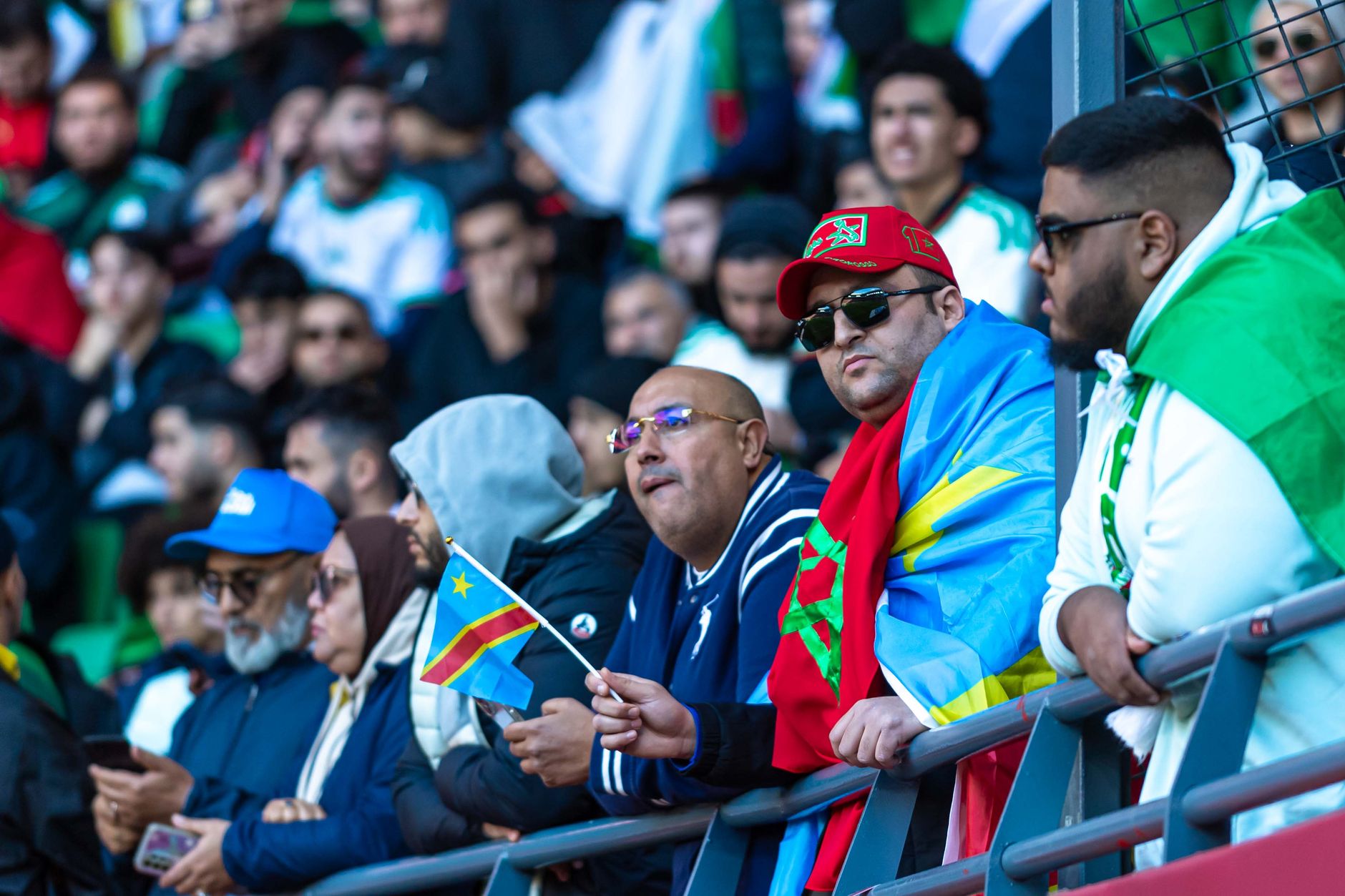
Photo by Guylain Kipoke on Pexels
The common mistake is treating Algeria as a permanently elite side simply because of its 2019 continental triumph and famous individual talent. That is lazy analysis. The team is dangerous, absolutely, but international football punishes anyone who confuses historical quality with present chemistry. I have watched enough tournament favourites collapse after one red card, one bad defensive rotation, or one overconfident midfield selection to know the difference matters.
Want a clearer match-by-match framework before following Algeria’s 2026 campaign?
Before 2025: how the Algeria national football team worked
Before 2025, Algeria’s best performances usually came from a flexible 4-3-3 or 4-2-3-1 structure built around wide attackers, a mobile number 10, and fast vertical attacks. The side could control possession against weaker African opponents, then change tempo through Riyad Mahrez, while Ismaël Bennacer and other midfielders helped connect the first and final thirds. At its best, Algeria did not merely cross the ball and hope; it created overloads on the flank, pulled full-backs inward, and released runners behind the defensive line.
The 2019 Africa Cup of Nations victory under Djamel Belmadi demonstrated that formula clearly. Baghdad Bounedjah offered physical presence up front, Mahrez supplied left-footed delivery and decisive set pieces, and the defensive unit defended with enough discipline to survive close matches. The Confederation of African Football records Algeria’s 2019 title as a defining modern achievement, but the tournament also exposed a useful tactical truth: Algeria were strongest when their attacking stars accepted defensive responsibility.
Historical context still matters. Algeria qualified for the 1982, 1986, 2010, 2014, and 2022 FIFA World Cups, although the 2022 tournament itself was hosted in Qatar and Algeria did not qualify for the finals. The 2014 team remains the benchmark because it combined Sofiane Feghouli’s creativity, Islam Slimani’s direct running, and disciplined counterattacking. Against Germany in the round of 16, Algeria pushed the eventual champions into extra time, a performance that explains why opponents continue to respect the badge.
- Strength: creative wide players who can change a match in one action.
- Risk: defensive spaces can open when both full-backs advance.
- Key variable: whether the midfield protects the centre after possession is lost.
- Prediction clue: Algeria’s first-half intensity is often more informative than raw possession.
To compare Algeria’s tactical profile with other African contenders, see our [Internal Link: African World Cup teams tactical guide].
The numbers that history hides
One information edge gets ignored constantly: Algeria’s reputation can inflate pre-match expectations even when the opponent’s defensive block is well organised. Against compact teams, the problem is not usually a lack of attacking names; it is the number of clean receptions between the lines. If Aouar or Mahrez receives facing his own goal, Algeria may circulate possession without producing high-quality chances.
The second overlooked detail is squad continuity. A veteran such as Aïssa Mandi brings leadership and positional knowledge, but accumulated minutes can reduce recovery speed across a three-match tournament schedule. Therefore, a prediction based only on FIFA ranking, historical titles, or star-player value is incomplete. Match context, travel, weather, and the number of changes from the previous fixture can shift the likely result more than casual bettors expect.
[Internal Link: how to read football lineups and injury news]
What changed for Algeria in 2026?
The 2026 shift is the expansion of the FIFA World Cup from 32 to 48 teams, with Canada, Mexico, and the United States hosting the tournament. That change creates more qualification places and a different group-stage calculation, but it does not make every match easier. More teams also mean more unfamiliar opponents, longer travel patterns, and greater uncertainty in early tournament pricing.
For Algeria, the 2026 cycle is about balancing established authority with a younger generation. Riyad Mahrez, listed at age 35 in the referenced 2026 squad data, remains capable of deciding matches through technique and experience. Yet Rayan Aït-Nouri, Ibrahim Maza, Farès Chaïbi, Anis Hadj Moussa, and Jaouen Hadjam represent a different physical and tactical profile. They can press more aggressively, carry the ball over distance, and give Algeria options when the traditional right-sided attack is blocked.
The FIFA World Cup 2026 official site confirms that the tournament will be staged across North America, while Los Angeles is scheduled to host eight matches and 39 days of fan activity according to FIFA World Cup 26 Los Angeles. That geographic scale matters. A team travelling between venues and climates may need deeper rotation than Algeria required during a compact Africa Cup of Nations schedule.
Why is the 2026 generation different?
Algeria’s 2026 generation is different because it combines Mahrez-era creativity with younger players who offer greater pressing range, running power, and positional flexibility. Ibrahim Maza is listed as a 20-year-old midfielder in the referenced squad data, while Aït-Nouri is a modern attacking full-back whose value extends beyond traditional defending. Together, they can alter Algeria’s tempo and build-up patterns.
That blend creates a tactical choice for the coaching staff. Start too many veterans and Algeria may control possession but lose intensity late in matches. Start too many younger players and the team may gain athleticism while losing the calm required in knockout football. The correct answer will vary by opponent, but the best version of Algeria will probably use experience as a stabiliser rather than treating it as the entire system.
The referenced squad figures also show why small sample sizes must be handled carefully. Mahrez recorded two goals and one assist across four listed appearances, while Aouar produced two assists in the same broad data set. Those numbers are useful signals, not guarantees. Four international appearances cannot establish a player’s true scoring rate, especially when opposition quality and substitute minutes differ.
Get the latest Algeria player trends and tournament context from Match Daily before drawing conclusions from a single box score.
What changed for players?
The biggest player-level change is that Algeria now has more credible competition for minutes across defence, midfield, and the forward line. The current squad data names three goalkeepers, including Luca Zidane, Oussama Benbot, and Melvin Mastil; experienced defenders such as Mandi and Bensebaini sit alongside Aït-Nouri, Belghali, Hadjam, and Zineddine Belaïd. That depth does not automatically create stability, but it gives the coach more solutions after injuries or tactical problems.
In midfield, Ramiz Zerrouki and Nabil Bentaleb provide defensive awareness, while Aouar, Chaïbi, Boudaoui, Maza, and Yassine Titraoui offer different combinations of ball progression and final-third movement. The important distinction is not simply age. It is function. Algeria needs at least one player able to protect the centre, one able to receive under pressure, and one able to attack the space behind the opposing midfield.
The forward group remains built around Mahrez, Gouiri, Hadj Moussa, and Nadhir Benbouali in the supplied roster. Mahrez is still the most recognisable match-winner, but an opponent that doubles him can force Algeria to attack elsewhere. That is where Gouiri’s movement and the younger wide players become decisive. If the secondary attackers remain passive, Algeria becomes predictable; if they make aggressive runs, Mahrez receives more room.
Photo by Aziz Abdulrahman on Pexels
A practical player-watch list
For serious match analysis, track these indicators rather than merely counting goals:
- Mahrez’s starting position: A wide starting role gives him one-versus-one opportunities, while a narrower role may improve combination play but crowd the central lane.
- Aït-Nouri’s defensive workload: His attacking contribution is valuable, yet repeated high turnovers can expose Algeria’s left side.
- Maza’s minutes: A young midfielder receiving 20 to 30 late-game minutes can change the rhythm against tiring opponents.
- Bensebaini and Mandi’s partnership: Their communication is more important than isolated tackle totals.
- Gouiri’s shot locations: Central touches inside the penalty area are a stronger signal than total attempts from distance.
This is where a contrarian conclusion becomes useful: a deeper squad does not necessarily mean Algeria should play more aggressively from the opening whistle. In tournament football, rotation depth is most valuable after the match becomes stretched. Holding a controlled first phase and introducing speed later may produce better expected chances than forcing an open game immediately.
For more detail on formation matchups, explore the [Internal Link: Algeria formation and player-role analysis].
What does Algeria’s current outlook mean now?
Algeria remains a credible African contender, but the sensible 2026 assessment is “dangerous and condition-dependent,” not “automatic favourite.” The team has enough quality to beat strong opposition, especially when Mahrez, Aouar, Gouiri, and the wide defenders connect quickly. However, the result depends heavily on whether the midfield can prevent transitions and whether the defence maintains spacing when Algeria attacks with numbers.
The practical prediction model should separate four questions:
- Is Mahrez starting, and is he physically able to complete the match?
- Has Algeria selected enough ball carriers to escape an organised press?
- Does the opponent attack the channels behind Aït-Nouri or Bensebaini?
- Is the match a must-win fixture, where Algeria may accept greater defensive risk?
Those questions matter more than a generic claim that Algeria “has better players.” Data shows that international matches are unusually sensitive to game state: an early goal changes possession behaviour, substitution timing, and defensive distance. That is why live observation can be more informative than a pre-match opinion formed days before kickoff.
The International Federation of Association Football describes the World Cup as its flagship men’s competition, but tournament status alone does not predict a scoreline. Algeria’s best route is controlled aggression: press after clear triggers, protect the central corridor, and use Mahrez’s delivery without making every attack depend on him.
Want a disciplined way to follow Algeria without chasing hype?
What are the three predictions for next quarter?
The three strongest Algeria predictions for the next quarter are tactical rather than score-specific: younger players will receive larger roles, Mahrez will remain central to high-value attacking moments, and Algeria’s defensive transitions will decide whether its results outperform expectations. These forecasts follow squad age, role distribution, and the 2026 tournament environment rather than nostalgia. They should be reassessed after every international window.
1. Younger players will gain meaningful minutes
Maza, Chaïbi, Aït-Nouri, and Hadj Moussa are likely to become increasingly important because they offer qualities that cannot be manufactured through experience: acceleration, pressing energy, and the ability to carry the ball through pressure. That does not mean every youngster should start against every opponent. It means the coaching staff has stronger incentives to test them before the World Cup rather than discovering their limitations in a knockout match.
2. Mahrez will remain decisive, but less isolated
Mahrez’s left foot and decision-making are still elite assets for Algeria. Yet the tactical requirement is changing. Opponents know how to shade two defenders toward him, so Algeria must create credible threats through Gouiri, Aouar, Maza, and the overlapping full-backs. If those players occupy defenders honestly, Mahrez’s chances will improve even if his touch count falls.
3. Transition defence will determine Algeria’s ceiling
The decisive weakness to monitor is the space left after failed attacks. If Algeria loses the ball with both full-backs advanced and no midfielder covering the centre, even a technically weaker opponent can create a high-quality chance quickly. The solution is not simply to defend deeper. It is to coordinate the counter-press, delay the first pass, and force attacks toward the sideline.
My prediction is straightforward: Algeria will look excellent in matches where its midfield controls the second ball, and vulnerable when the game becomes a repeated end-to-end exchange. That is not a contradiction. It is the exact profile of a talented side transitioning between generations.

Photo by Gergely Badacsonyi on Pexels
Before making any football-related wager, check local laws, age requirements, and the final confirmed lineup. Match Daily can help organise evidence, but no preview removes uncertainty, and no bet should exceed a budget you can afford to lose.
Frequently Asked Questions
Q: What is the Algeria national football team?
A: The Algeria national football team is Algeria’s men’s senior representative side, governed by the Algerian Football Federation and competing in CAF and FIFA competitions. The team is commonly known as Les Fennecs, or The Desert Foxes. Algeria won the Africa Cup of Nations in 1990 and 2019 and reached the 2014 FIFA World Cup round of 16.
Q: How does Algeria qualify for the 2026 FIFA World Cup?
A: Algeria qualifies through the CAF World Cup qualifying pathway, where African national teams compete for the continent’s allocated places. The exact route depends on the qualifying group structure and official FIFA and CAF regulations. Check the latest standings, fixture list, goal difference, and remaining matches rather than assuming historical strength guarantees qualification.
Q: Who are Algeria’s most important players in 2026?
A: Riyad Mahrez, Rayan Aït-Nouri, Ramy Bensebaini, Houssem Aouar, Amine Gouiri, and Ibrahim Maza are among Algeria’s most important 2026 names. Mahrez supplies elite creativity, while Aït-Nouri adds attacking width and Maza represents emerging midfield potential. Their impact depends on starting roles, fitness, opponent quality, and how effectively Algeria protects the centre after losing possession.
Q: What is the difference between Algeria’s 2019 team and its 2026 team?
A: Algeria’s 2019 team relied more heavily on the established core that won the Africa Cup of Nations, while the 2026 group blends that experience with younger, more athletic players. The newer squad offers greater rotation and pressing potential but may still need time to develop defensive coordination. Comparing trophies alone misses the tactical transition taking place.
Q: How should I analyse an Algeria match prediction?
A: Start with the confirmed lineup, unavailable players, venue, opponent shape, and Algeria’s recent midfield selection. Then assess whether Mahrez is supported by secondary attackers and whether both full-backs can advance safely. Finally, compare the match state and competition incentives; a must-win qualifier should not be analysed like a low-pressure friendly.
Q: Why can Algeria struggle against defensive teams?
A: Algeria can struggle against defensive teams when its creative players receive the ball in crowded central areas without enough off-ball movement. A compact opponent may allow harmless possession while blocking passes into the penalty area. Algeria improves when Gouiri, Aouar, Maza, and the full-backs rotate positions and force defenders to make repeated decisions.
Q: Is Match Daily useful for following Algeria’s 2026 campaign?
A: Match Daily is useful for readers who want FIFA World Cup-focused previews, tactical discussion, player statistics, and tournament coverage in one place. Its analysis should be used alongside official FIFA and CAF information, confirmed team news, and responsible decision-making. For any betting activity, follow applicable laws, meet the legal age requirement, and set a firm spending limit.
Review Algeria’s latest tactical updates, player data, and 2026 World Cup coverage before the next match.
End of briefing.
Match Daily · Intelligence Division · High-Stakes Analysis